What to Expect

Lessons are:

  • Private, one-on-one instruction

  • Up to 10 minutes per day

  • Monday through Thursday

  • 5-7 weeks depending on the student

  • Customized to your child's developmental readiness, physical abilities, and emotional needs

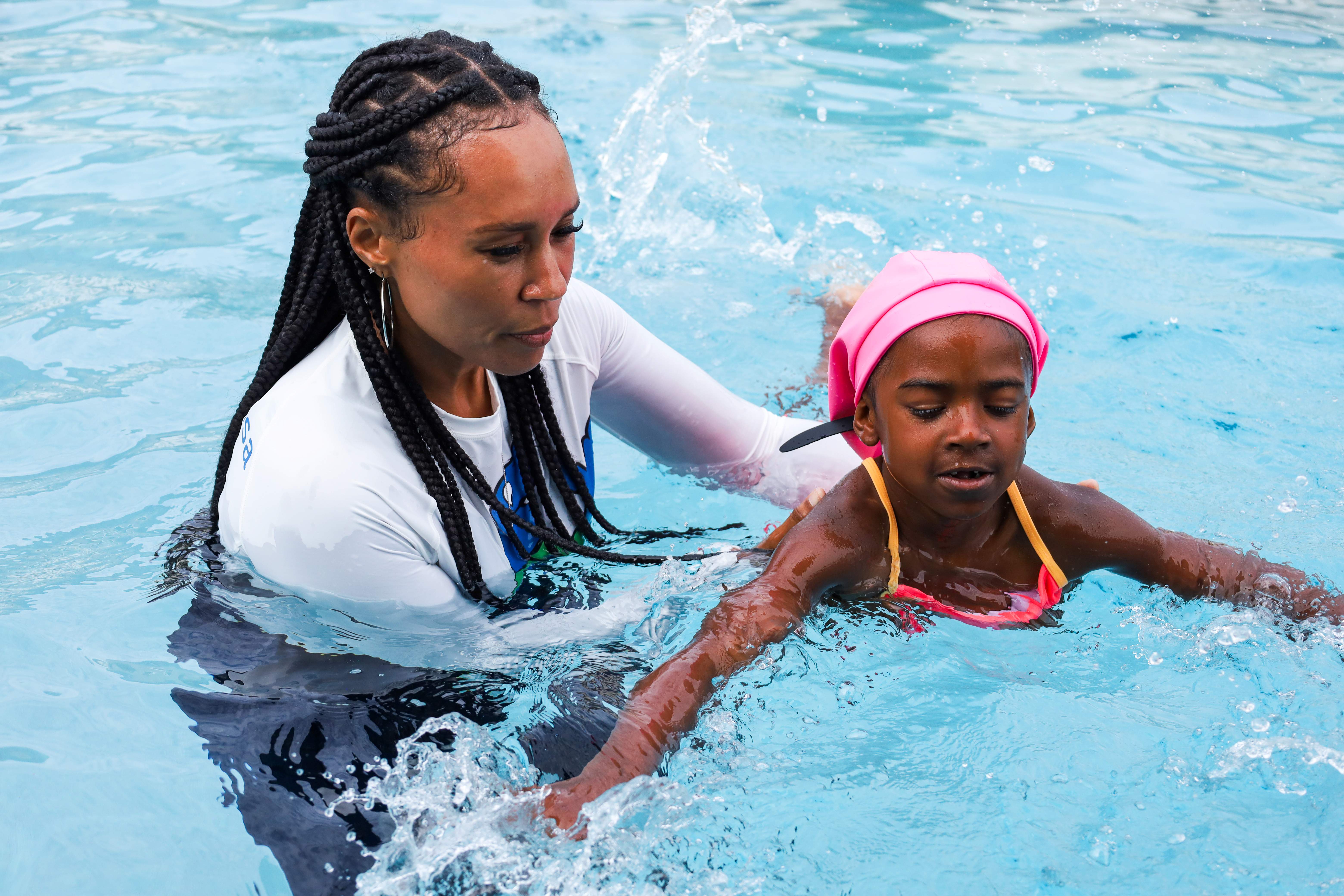
Children who are not yet walking typically learn a Rollback to Float, allowing them to roll onto their back, float independently, rest, breathe, and wait for help.

Children who are walking generally learn the Swim, Float, Swim sequence, allowing them to swim to safety, float to rest and breathe, then continue swimming until they reach the wall, steps, or another safe exit.

As both a special educator and an ISR instructor, I understand that every child learns differently. My goal is to create a safe, supportive environment where your child can build confidence while learning life-saving water survival skills.SYour child’s success in ISR is a team effort. Consistency, communication, and following ISR safety protocols help me provide the safest and most effective lessons possible.
Swim Instructor Image
FAQs
Will my child need additional lessons?
Based on our research, we know that refresher lessons are important because children change so much both cognitively and physically during the first 0-5 years of life. It is important that their water survival skills grow with their bodies. Frequency depends on the child's age, growth rate, skill level and confidence level. The goal of refresher lessons is to help your child adjust his/her new body size and weight to his/her existing skill level. Your instructor will work with your child to help fine-tune his or her aquatic experience to assist with building efficiency, which will result in self-confidence. This is especially important if your child has not been able to practice any appropriate aquatic skill between seasons.
Why are lessons 5 days per week and for only 10 minutes?
The reason for this is multifaceted. First, repetition and consistency are crucial elements of learning for young children. Research shows that short, more frequent lessons result in higher retention. Second, most children have fairly short attention spans and will not be able to focus on the task for longer and we want to take advantage of the best time for learning. A third reason is that, though the pool temperature is maintained at 78-88 degrees, the temperature is still lower than your child's body temperature. Lessons are work and therefore will also be losing body heat. Instructors check students regularly for temperature fatigue since this is an indicator of physical fatigue.
I hear you say your priority is survival skills. Will my child learn to actually swim?
Yes. At ISR, we believe that part of survival for a child who can walk is swimming. Children learn the swim-float-swim sequence so that they could get themselves to safety. The difference in our program is that they will learn swimming AND survival skills and how to be an aquatic problem solver.
How do the kids react during the first few lessons?
Children often fuss during the first few lessons because they are in a new environment and around new people. As your child becomes more confident in his/her ability in the water, the fussing will decrease. It is not unlike the first time you tried a new exercise class or were asked to perform a task at work that you’d never done before: the first time you try a new task it is always challenging, until you get the hang of it. It is the same for your young child. Your child is learning to perform a skill that he/she’s never done before.
Download ISR's Family Aquatic Safety List to help protect your family from the hazards of an aquatic environment
Download Safety List

Ready to Get Started?

Check out our programs and get started today!