Alisa Your Neighborhood ISR Instructor

As a special educator, I’ve spent my career understanding that children learn differently. My experience working with children with a wide range of developmental, communication, sensory, and learning needs shapes the way I approach every child who enters the water with me. I believe in meeting children where they are while maintaining the integrity and safety of ISR instruction.

Becoming an ISR Instructor was a significant commitment because I wanted to provide families in my community with access to individualized, high-quality survival swim instruction. I completed ISR’s intensive training program, combining academics, hands-on instruction, and supervised in-water training.

Through ISR with Alisa, I provide individualized survival swim instruction for infants and young children while helping families understand that water safety is about more than learning to swim. It’s about giving children skills that could save their lives.

I’m proud to serve families throughout the Potomac Valley area, including Maryland, Virginia, and West Virginia.

Every child is different. Every lesson is individualized. The goal remains the same: skills for a safer life around the water.
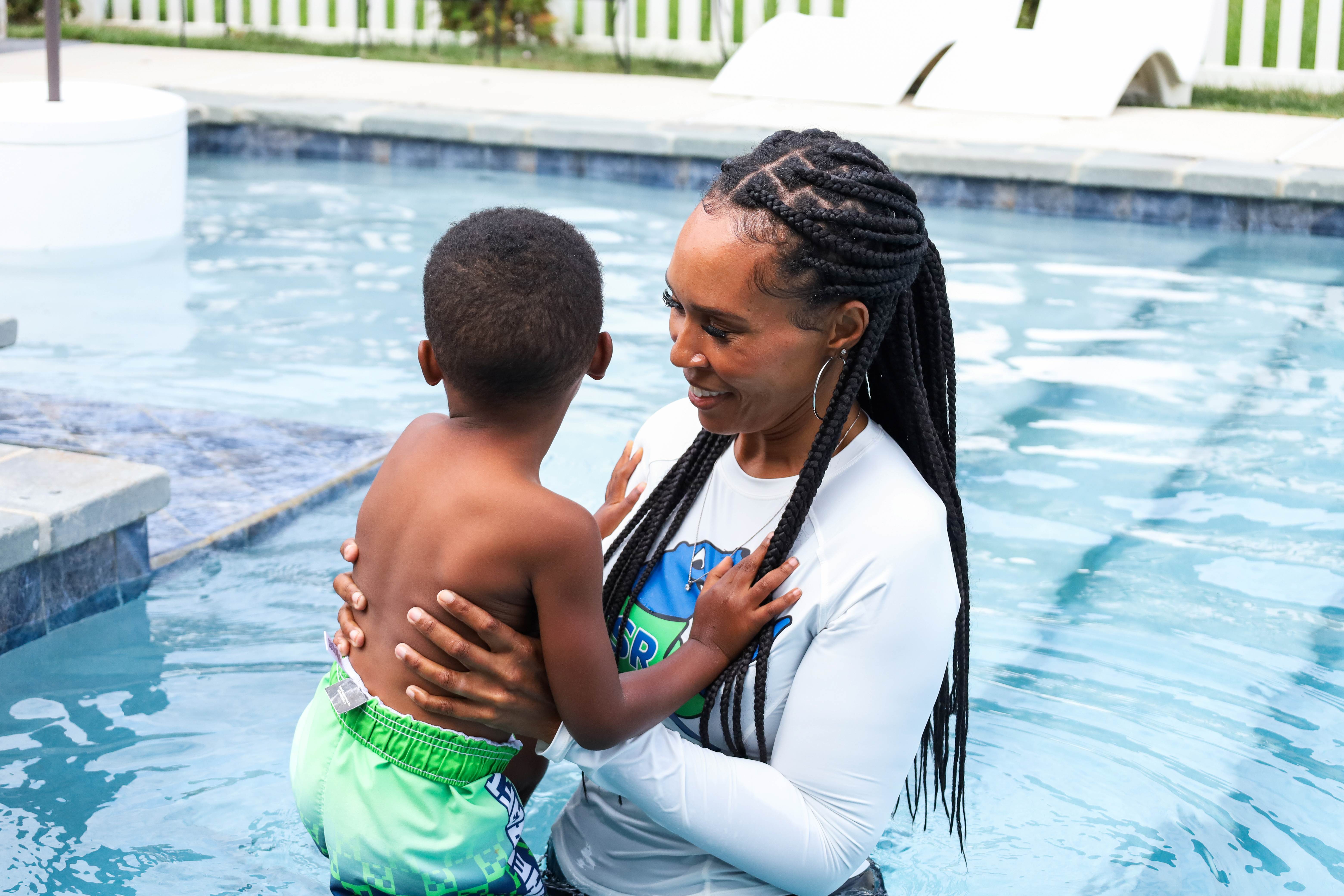
Swim Instructor Image
FAQs
How can you teach babies and young children to swim?
ISR instructors teach infants to swim by honoring each child's individual strengths and experiences. They understand the fundamentals of the behavioral sciences, child development and of sensori-motor learning as it relates to the acquisition of aquatic survival skills; they use this education to guide each child through the sequence of learning to swim and float.
What other benefits does the ISR lesson experience provide students?
Every child is unique. However, many parents report that once their young children have mastered learning to swim, the resulting confidence in their abilities engenders a positive self-concept that is often demonstrated in other aspects of their personalities. There are also obvious health and other psychological gains.
Is it the baby fat that makes them float?
Actually, the primary factor in a baby’s ability to float is the ability to take air into the lungs. To maintain this access to air, the child must adjust his/her posture. The difference in positioning for an adult can be inches. For a baby, this adjustment is reduced to centimeters. If a child’s body posture is just a few centimeters off, it can make the difference between the face being submerged or the child having access to air.
Do parents have to leave during the lessons?
No. You are truly the best cheerleader your child could have. Your positive support and encouragement are invaluable to creating an effective learning environment for your child.

Learn More

Check out our programs and get started today!